

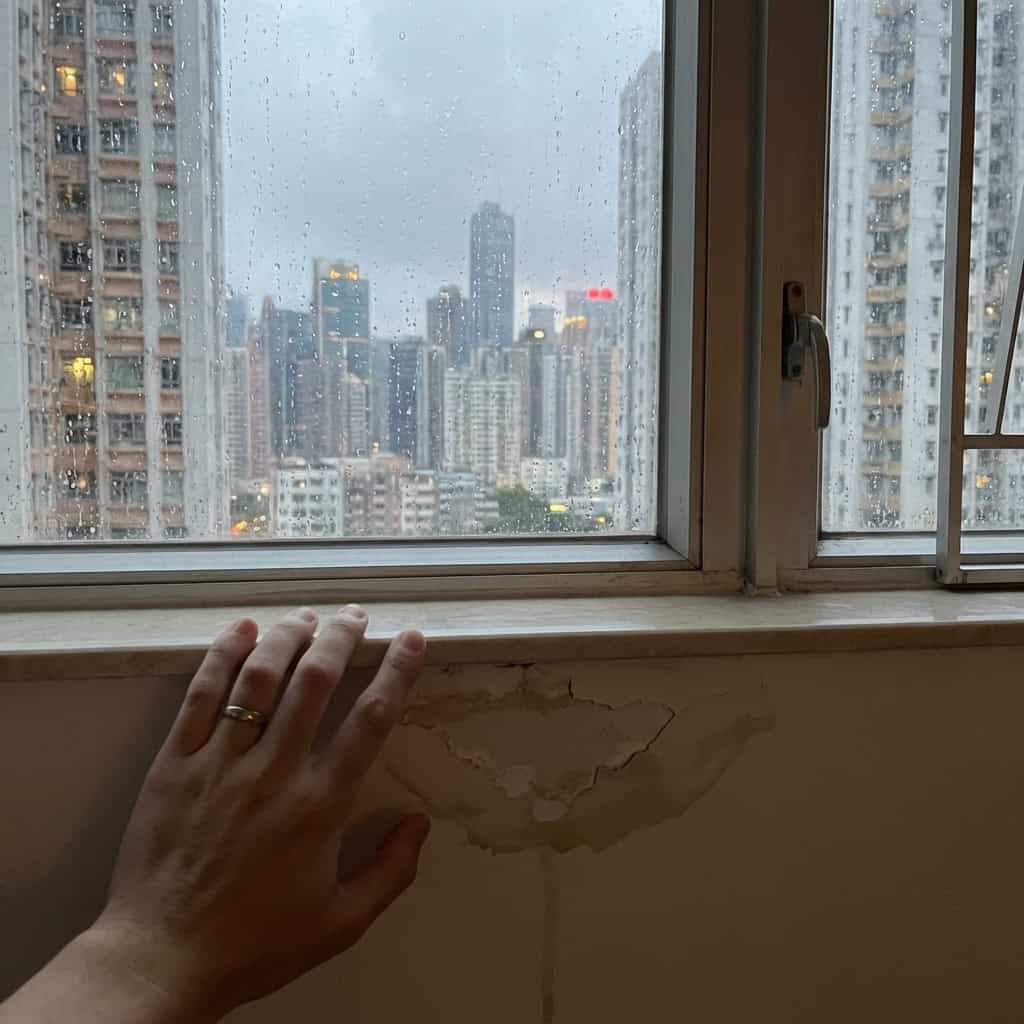


If you are an expat in your forties, fifties or sixties, you have probably heard the same line I hear constantly: I’m renting, so I don’t need home insurance. I understand why it feels that way. But by this stage of life there is usually a family, a home full of belongings and neighbours on every side. That’s where home insurance for expats Hong Kong matters most — it protects the people and the liabilities around you, far more than the flat itself.
You see the security guards in the lobby. You trust the management company’s building insurance. You assume burglary is the only real risk.
Then a washing machine leaks.
Or a typhoon(1) hits.
Or a window seal fails during a rainstorm.
And suddenly, they’re facing liability claims that run into hundreds of thousands of Hong Kong dollars—all because they didn’t know they needed proper home insurance.
The Renting Misconception: What You Need to Know About Six-Figure Exposure
Related reading
- Our Home Contents Insurance service page — full overview of coverage we arrange.
- Home Contents Premiums Guide
- Home Contents for Residents

When expatriates tell me they don’t need home insurance because they’re renting, I know exactly what financial exposure they’re overlooking.
Water damage. Typhoon destruction. Broken windows. These aren’t just property risks—they’re personal liability scenarios that standard landlord policies won’t cover. This is precisely why home insurance for tenants is essential.
Here’s what happens in reality: A faulty washing machine leaks water down to the flat below. The damage bill runs to several tens of thousands of Hong Kong dollars. The downstairs neighbour demands compensation for ruined flooring, damaged fixtures, and potentially custom finishes.
You’re personally liable—and without home insurance, you’ll pay this from your own pocket.
The landlord’s building insurance doesn’t cover tenant negligence. The management company’s policy protects the structure, not your liability to third parties. According to Hong Kong’s Building Management Ordinance(2), owners’ corporations must procure third party risks insurance with a minimum coverage of HK0 million per event for common areas not your personal liability as a tenant. Comprehensive home insurance bridges this protection gap.
When Climate Risk Meets High-Density Living
I recently handled a claim where a client’s entire ground floor was flooded through by a typhoon.
The settlement—covering furniture, appliances, and interior repairs—came to HK50,000.
This isn’t an outlier anymore. According to the Hong Kong Insurance Authority(3)‘s 2023 statistics, extreme weather conditions in September 2023 significantly impacted Property Damage business performance, with the Black Rainstorm and Typhoon Saola generating HK.9 billion in insurance claims. Typhoons are becoming more frequent and more severe across Hong Kong.
The frequency is increasing. The severity is intensifying. What “adequate coverage” meant five years ago no longer applies. This is why reviewing your home insurance coverage regularly has become critical.
Another recent case: simple water leakage through a window and the adjoining wall. The client had to replace wall tiles and flooring in the bathroom. The final bill exceeded HK0,000.
The downstairs neighbour also had damage which he claimed was caused by the leak from above.
In Hong Kong’s high-density living arrangements, a single incident in your flat creates cascading liability. Water doesn’t respect property boundaries. Damage multiplies as it travels downward through multiple floors. As Zurich(4) Insurance Hong Kong notes, if a leak originates from your property and affects the household downstairs, you may be expected to cover the damages incurred by the leakage, even though you are not living there as the owner. Proper home insurance with adequate liability coverage protects you from these cascading claims.
The Liability Determination Process Nobody Warns You About
When damage occurs and your neighbour claims you caused it, determining liability becomes a complicated and lengthy process.
Months pass. Legal questions arise. Engineers assess the damage. Insurance adjusters investigate causation.
During this entire period, you face uncertainty about whether you’ll be held personally responsible for tens or hundreds of thousands of dollars in repairs.
This is where proper home insurance with third-party property damage cover provides reassurance. If you are deemed liable after the investigation concludes, you have insurance cover which will protect you.
Without home insurance, you’re personally exposed to the full financial liability whilst waiting for the determination process to complete.
The HK0 Million Standard That Isn’t Always Sufficient
Standard third-party liability cover in home insurance policies in Hong Kong typically provides HK0 million in protection. This aligns with Hong Kong’s mandatory third party risks insurance requirements for building common areas, which require a minimum of HK0 million per event under the Building Management Ordinance.
For most expatriates, this proves sufficient. But some home insurance policies offer higher limits—and for good reason.
If you live in a very upscale building, the property values around you change the risk calculation. Custom marble flooring, designer fixtures, premium finishes—replacement costs in luxury developments can escalate rapidly.
Entry-level home contents policies in Hong Kong are inexpensive relative to what they protect, and they usually bundle a personal liability limit alongside the contents sum insured. Higher tiers extend that third-party liability considerably further. The limits vary a good deal between insurers, so the liability figure is worth comparing as carefully as the contents figure.
The modest annual home insurance investment—typically ranging from HK00 to HK,000—stands in stark contrast to the six-figure liabilities these real-world scenarios demonstrate.
The Home Contents Insurance Valuation Gap Expats Don’t Realise Exists
Most expatriates dramatically underestimate what it costs to replace their possessions in Hong Kong’s premium market.
Generic home contents insurance plans typically cap claims at around HK00,000 for all personal possessions, with individual items limited to approximately HK0,000–25,000 per item.
A single engagement ring could exceed the individual item limit for many standard policies.
Think about what you actually own. Electronics, furniture, clothing, kitchenware, sporting equipment, jewellery. Now consider what it would cost to replace everything at Hong Kong retail prices.
The gap between standard coverage limits and actual replacement costs creates systematic underprotection for expatriates who bring premium possessions to Hong Kong without realising standard policies won’t adequately cover them.
The Home Insurance Underinsurance Penalty Hidden in Policy Fine Print
Many Hong Kong home insurance policies apply an “average” or proportional settlement clause when underinsurance is discovered.
If you insure only half of the genuine value, the insurer may pay only half of a valid claim—even if you didn’t lose everything.

This creates a trap that is easy to avoid once you know it is there. You pay home insurance premiums thinking you’re protected. Then when you file a claim, you discover the coverage you purchased was insufficient, and the insurer reduces your payout proportionally.
Hong Kong ranks amongst the world’s most expensive real estate markets. Replacement costs reflect this premium pricing. Standard home insurance coverage assumptions from other markets don’t translate.
Why Security Guards Don’t Eliminate Home Insurance Needs in Hong Kong
Expatriates see the lobby security and assume burglary risk is minimal.
They’re right about burglary being relatively rare in managed buildings with security presence.
But burglary represents only a fraction of actual home insurance claims.
Water damage from faulty appliances. Typhoon destruction. Window leaks during rainstorms. Fire. Accidental damage to third-party property. Personal liability when someone is injured in your flat. According to AXA(5) Hong Kong’s home insurance guidance, typhoons can cause windows to shatter, damage items on balconies, and create water ingress that affects multiple floors.
Security guards don’t prevent washing machines from malfunctioning. They don’t stop typhoons from flooding ground-floor units. They don’t eliminate your legal liability when your negligence causes damage to neighbouring properties.
The protection gap isn’t about theft—it’s about the dozens of other scenarios that create financial exposure in Hong Kong’s unique property environment. This is why comprehensive home insurance remains essential regardless of building security measures.
A story from the desk
An expat family in their forties, renting in an older Mid-Levels block, called me after their washing machine overflowed and the water seeped into the flat below, staining a freshly decorated ceiling. Their first fear was that a claim like this might run into a six-figure sum they would have to find themselves. It did not. The personal liability section of a straightforward contents policy is designed for precisely this kind of everyday mishap, and once I showed them how it worked the worry drained away. They had assumed protection would be complicated; in the end it was one clear conversation.
Building Proportionate Protection for Your Actual Risk Profile
Proper home insurance in Hong Kong isn’t about buying the most expensive policy.
It’s about matching coverage to your actual exposure.
Start with an honest contents valuation. Walk through your flat and calculate genuine replacement costs at Hong Kong prices. Include everything—furniture, electronics, clothing, kitchenware, sporting equipment, jewellery.
Most expatriates underestimate this figure by 30-50%.
Next, consider your third-party liability exposure. Standard HK0 million coverage proves sufficient for most situations. If you live in an upscale building with premium finishes throughout, higher limits provide additional protection.
Examine home insurance policy exclusions carefully. Some policies exclude specific types of water damage or impose waiting periods for certain claims. Understanding what’s not covered matters as much as understanding what is.
Review your home insurance coverage annually. Property values change. You acquire new possessions. Climate risks evolve. What proved adequate last year may not match your current exposure.
The International Consultation Advantage in a Complex Market
Generic home insurance policies follow standard templates designed for broad market appeal.
Specialist insurance advisers identify protection needs that generic policies systematically miss.
- Your contents and electronics
- Liability to flats below
- Liability to flats above
- Temporary accommodation
- Theft + forcible entry
- Accidental damage (rider)
- The building structure (landlord’s job)
- Common areas (OC policy)
- Wear and tear
- Pre-existing damage at move-in
- Business activity from home
- Unspecified high-value items
When I consult with expatriates about home insurance, I ask specific questions about their living situation. Do they rent or own? What floor do they live on? What’s the building construction? How old is the property? What appliances do they have? What’s their actual contents value?
These details shape appropriate coverage recommendations.
Ground-floor units face different typhoon flooding risks than upper floors. Older buildings have different water damage profiles than new construction. Tenants need different liability protection than owners.
The home insurance consultation process matches policy features to individual risk profiles rather than applying one-size-fits-all solutions.
What Proper Home Insurance Protection Looks Like for Your Apartment
Adequate home insurance in Hong Kong provides three core protections:
Contents coverage that reflects genuine replacement costs in Hong Kong’s premium market, with appropriate limits for individual high-value items.
Third-party liability protection that covers damage you cause to neighbouring properties or injuries that occur in your flat, with limits matched to your building’s property values.
Additional living expenses coverage that pays for temporary accommodation if your flat becomes uninhabitable due to covered damage.
These three elements create comprehensive home insurance protection against the actual risks expatriates face in Hong Kong’s property market.
The annual home insurance premium investment—typically HK00 to HK,000—provides peace of mind during the lengthy liability determination process and financial protection when claims arise.
Because when a washing machine leaks, or a typhoon floods your ground floor, or a window seal fails during a rainstorm, proper home insurance means you face inconvenience rather than a serious financial setback.
That distinction matters in one of the world’s most expensive property markets.
Many of the expats we speak to are managing more than just their home insurance. If you have arrived through an international relocation, you may already be weighing several kinds of protection at once — home insurance alongside health insurance, and sometimes a review of what a previous employer arranged against what you now need to hold personally. Working with an insurance broker who understands the wider picture, rather than just one product in isolation, means you are not left comparing plans line by line on your own. We look at your actual risk profile — home fires, valuable items such as jewellery or art, and the everyday personal belongings that add up to more than most people expect — and build a picture across your personal insurance needs, not just the policy in front of you. For a family settling into Hong Kong from another global posting, that single conversation is often worth more than a marginally cheaper premium on any one plan.
A good broker’s services do not stop at finding you a plan. Before anything is signed, always check that whoever you are dealing with is a properly licensed intermediary — the Insurance Authority publishes a public register for exactly this reason(6). For someone newly arrived in the city, that single check is worth doing before comparing a single premium, because it tells you whether the advice in front of you is regulated at all.
This matters more, not less, if your circumstances span more than one country. Many of the families we help are only in Hong Kong for a defined posting, with plans that may take them to another city next, and savings or other policies that may still be sitting in a previous country. A broker who works across international markets, rather than one local product line, can flag where your existing global cover already overlaps with a new Hong Kong plan — and where it genuinely does not.
Frequently Asked Questions
Does my landlord’s building insurance cover me as a tenant?
No. The Building Management Ordinance requires owners’ corporations to insure the common areas, and the landlord’s own building policy protects the structure, not your personal liability. If your negligence causes damage to a neighbour, that falls to you, not the landlord’s cover.
What happens if my flat causes water damage to a neighbour’s flat?
Liability is not automatic or instant. Engineers assess the cause, insurance adjusters investigate, and the process can run for months while you face uncertainty about whether you will be held personally responsible. Home insurance with third-party liability cover is what protects you through that period and pays out if you are found liable.
How much does home insurance cost for expats in Hong Kong?
It is modest relative to the liabilities it protects against — typically a few hundred to a few thousand Hong Kong dollars a year for a policy that bundles contents cover with third-party liability protection. The right figure depends on your contents value and the liability limit you choose.
How You Get the Protection You Need
Home insurance doesn’t have to be complicated. At Expat Insurance, we help you understand exactly what you’re buying and make sure your policy protects what matters most to you.
No pushy sales tactics. We have a friendly conversation, show you the lay of the land, and explain the different options available. You move forward at your own pace. People choose to work with us because we educate them on their options and help them feel confident about what will work best for them.
We’ll walk you through the valuation process so you’re not caught by the underinsurance trap. We’ll explain the excess structure so you know what you’ll pay out-of-pocket for different claim types. And we’ll help you navigate the documentation requirements, whether you’re in a high-rise apartment or a village house.
Our goal is straightforward. We want you to have home insurance coverage that works when you need it.
Get in touch with us today. We’ll review your situation, answer your questions, and help you find a policy that provides the protection you need at a price that makes sense.
How We Work With You
Our process is straightforward and designed around your needs.
Step 1: We Talk and Answer Your Questions
We get in touch for a friendly conversation. We’ll explain who we are, what we do, and most importantly, what we’re going to do for you specifically. We’ll answer any questions you have about home insurance.
Step 2: We Educate You on Your Options
We’ll research the market and come up with quotes and options tailored to your situation. Whether you’re in a village house, an older building, or a standard apartment, we’ll find insurers willing to provide the coverage you need. We’ll take you through each option so you understand what’s available.
Step 3: You Decide What Works Best
We’ll meet with you in person or speak on the phone to discuss your options. We’ll explain the differences between policies, help you understand the excess structures, and make sure you’re comfortable with everything. The choice is yours. We’re here to help you make an informed decision.
Step 4: We Stay With You
Once your policy starts, we’re here to help. We’ll meet with you at least once a year to review your coverage, discuss any changes in your situation, and consider any additions you’d like to make. Your needs change over time, and your home insurance should change with them.
Speak with us today
No pushy sales. Just a friendly chat about your options.
+852 3563 9771 · [email protected]
Suite 701, Connaught Commercial Building, 185 Wan Chai Rd, Wan Chai
expatinsurance.com.hk/contact
Sources
- Hong Kong Observatory — Tropical cyclone warning signals database: the official record of every typhoon and severe-weather warning issued in Hong Kong, and the source of the storm frequency referred to here.
- Hong Kong e-Legislation — Building Management Ordinance (Cap. 344): the statute governing owners’ corporations and the division of responsibility for common areas, which decides where a building’s cover ends and a flat owner’s begins.
- Insurance Authority — Home insurance: common coverage: the regulator’s own summary of what a Hong Kong home policy typically covers, including home contents and owner’s improvements, third-party liability for incidents such as water seepage into a neighbour’s flat, alternative accommodation while a flat is uninhabitable, and the separate maximum limit insurers commonly apply to valuables.
- Zurich Insurance Hong Kong — Home and property insurance: a panel insurer’s published home range, cited for the structure of cover available in this market, including contents, legal liability and emergency temporary accommodation.
- AXA Hong Kong — Home insurance: a second panel insurer’s published home product, used to compare how cover is structured between insurers on the same risks.
- Insurance Authority, consumer education — Tips on buying insurance: the regulator’s consumer material on disclosure, on policy terms, and on checking an intermediary’s licence in the Register of Licensed Insurance Intermediaries before anything is signed.
Information in the insurance industry changes frequently. Linked content may change or become outdated. Please always contact us for help with your important insurance decisions.



