
You live in a Hong Kong high-rise with 24-hour security, CCTV cameras covering every angle, and a lobby that looks like a five-star hotel entrance.
So when someone mentions home insurance HK, your response is immediate: “I don’t need that. There’s no risk my flat will be burgled.”
You’re right about the burglary part. But here’s what you need to understand about the actual risks that home insurance HK protects against.
The security guard stationed in your lobby can’t stop a burst pipe. The CCTV cameras won’t prevent your neighbour’s washing machine from flooding your ceiling. And when the fire department breaks down your door because they suspect a gas leak—then discovers there wasn’t one—neither the security system nor the firemen will pay for the damage.
You will.
That’s where home insurance HK comes in.
1. What Happens When the Fire Department Breaks Down Your Door
Related reading
- Our Home Contents Insurance service page — full overview of coverage we arrange.
- Home Contents Premiums Guide
- Expat Home Insurance HK
Here’s what actually happens in secure buildings.
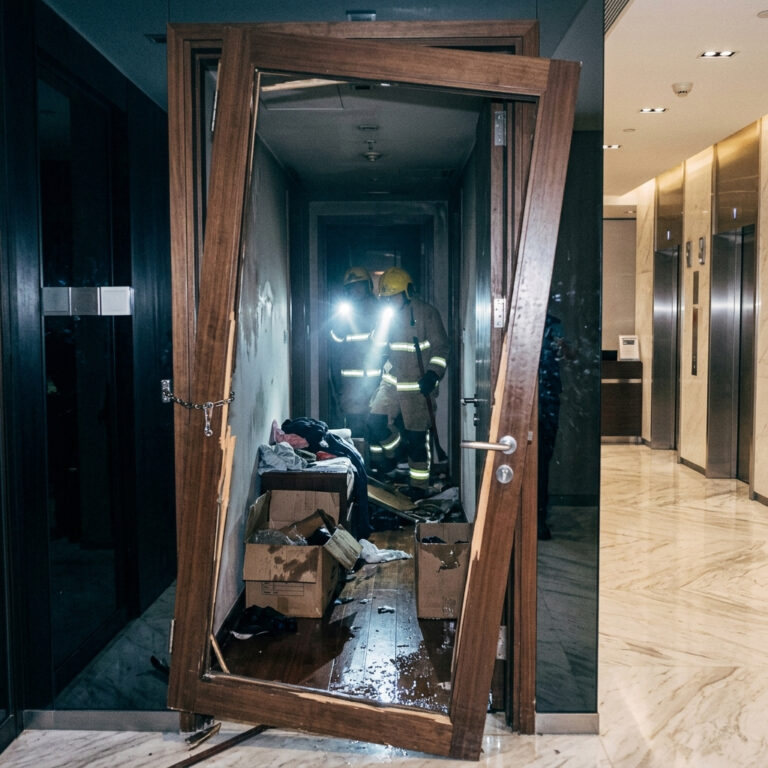
A tenant’s neighbour reports smelling gas. The fire department responds immediately. They break down the door, hose down the flat with water as a precautionary measure.
Then they discover there was no gas leak.
The tenant returns home to find a broken door, water-damaged furniture, ruined electronics, and soaked clothing throughout the flat. The fire department isn’t liable for any of it. The building management isn’t responsible. The neighbour who made the report in good faith owes nothing.
The bill? Tens of thousands of dollars. Potentially up to HKD 100,000.
A basic home contents insurance policy would have covered the entire incident. The annual premium for that coverage? Between HKD 600 and HKD 1,500.
That’s the cost-benefit equation most expat renters never consider until it’s too late.
2. Understanding What Your Landlord’s Insurance Doesn’t Cover
You assume the building is covered. You assume your landlord has insurance. You’re partially correct.
The building’s insurance covers the structure. Your landlord’s policy might cover the fixtures they own. But your furniture? Your electronics? Your liability to neighbours?
That’s on you.
In Hong Kong, both the tenant and landlord may need to bear legal responsibility in the event of an accident due to negligence that results in injury to a third party or property damage.
Your landlord’s policy won’t protect you when your washing machine catches fire and burns everything inside your flat. It won’t cover you when a burst pipe damages your neighbour’s flat below. And it certainly won’t reimburse you whilst you’re stuck in litigation trying to prove who’s at fault.
3. The True Cost of Water Damage in Hong Kong
Water damage claims in Hong Kong routinely exceed HKD 100,000.
Furniture. Electronics like televisions and computers. Damage to ceilings, walls, and floors. The costs accumulate faster than water spreads across a hardwood floor.
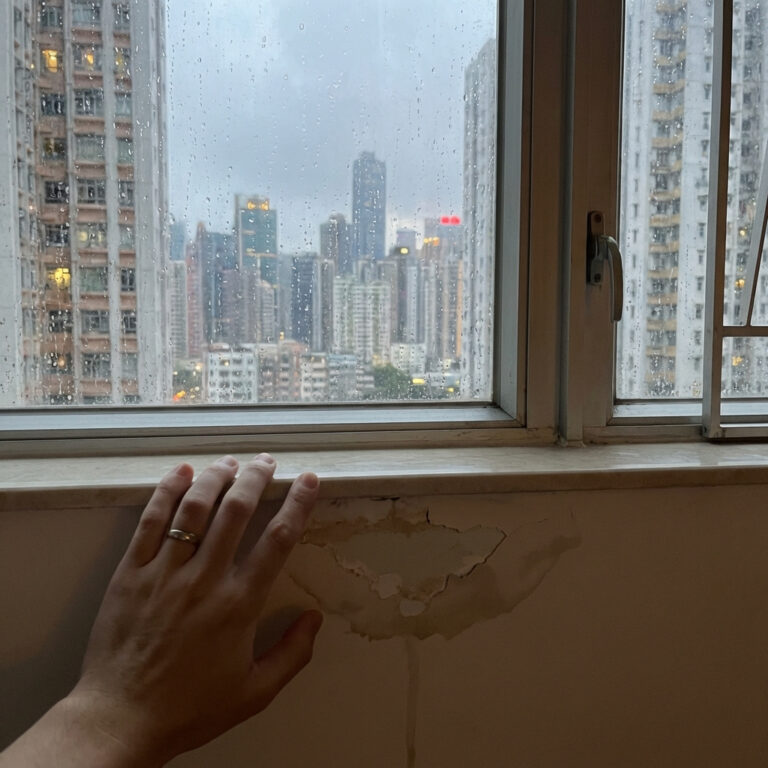
Hong Kong’s Joint Office for Investigation of Water Seepage receives between 30,000 and 40,000 leakage complaints annually. With the average age of buildings in Hong Kong exceeding 30 years, water leakage has become one of the most common issues in the city’s multi-storey buildings.
The water can come from anywhere. Adverse weather. A burst pipe in your own flat. A leak from the flat above you.
Even when you’re certain your neighbour is responsible, getting reimbursed becomes a separate challenge. The legal process drags on. You’re stuck waiting whilst your damaged belongings sit in your flat and the repair bills accumulate.
Having your own insurance policy means you’re protected regardless of who’s at fault or how long the litigation takes.
4. Real Case Study: The Typhoon Liability That Surprised Everyone
Windows blow open during a typhoon. Water pours into your flat, damaging your belongings.
Most people would call that an act of nature. Something beyond anyone’s control. Certainly not your fault.
Then your downstairs neighbour files a claim. They say water from your flat leaked down into theirs. The damage? Approximately HKD 60,000.
You assume you’re not responsible. It was weather-related. But the claim still comes. The landlord gets involved. Six months later, the case is still ongoing. Nobody has determined who’s at fault. Nobody knows if the water actually leaked from your flat or came from somewhere else.
But if you’re eventually held liable, you’re looking at a HKD 60,000 bill.
Unless you have home contents insurance with third-party liability coverage.
Then you can sleep at night whilst the lawyers sort it out. Because you know if you’re found liable, your policy covers the expense.
Research on recent typhoon impacts in Hong Kong documented “storm doors opening in the interior of buildings, causing multi-floor waterfalls and internal flooding, to broken windows, electrical fires started by flooded air-conditioning units.” Your security guard can’t prevent any of that.
5. Third-Party Liability Coverage Explained
Third-party liability is the coverage component most renters don’t understand until they need it.
You’re not just protecting your own belongings. You’re protecting yourself from claims made by others.
In Hong Kong’s vertical living environment, where flats are stacked on top of each other in high-density towers, one incident in your flat can affect multiple units. The compensation amount can easily exceed one million Hong Kong dollars.
Basic home contents policies provide up to HKD 10 million in third-party liability coverage. That protects you if home accidents cause bodily injury or property damage to others.
The legal costs alone in Hong Kong water seepage disputes can be significant. Even when the actual damage ranges from tens to hundreds of thousands of dollars, the litigation process can drag on for months or years.
In one documented case, a plaintiff claimed HKD 950,400 for loss of enjoyment when water affected 495 square feet of a 1,050 square-foot property over 48 months. The claim wasn’t just for repairs. It was for the disruption to their life.
Your security deposit won’t cover that. Your emergency fund probably won’t either.
6. What Home Contents Insurance Actually Covers
You need to know what you’re buying. Home insurance HK covers household contents if lost or damaged due to:
Fire – including electrical fires from appliances
Theft – yes, even though your building has security
Broken water pipes – one of the most common claims
Damage from typhoons and heavy rainfall – increasingly relevant as extreme weather events become more frequent
Third-party liability – protecting you from claims by neighbours or visitors
Policies typically provide coverage for home contents up to at least HKD 300,000, with personal liability coverage up to HKD 10 million. Some policies offer maximum claims of HKD 500,000 to HKD 1,000,000 per occurrence for typhoon or windstorm damage.
The coverage extends beyond just replacing damaged items. It can include temporary accommodation if your flat becomes uninhabitable. It covers legal costs if you need to defend against a liability claim.
And here’s something most expat renters don’t realise: policies allow you to transfer the cover to a new home within Hong Kong should you move during the policy period. Many offer refunds if you need to cancel early because you’re leaving Hong Kong.
The transient nature of expat life isn’t a reason to skip coverage. The flexibility built into modern policies makes coverage practical even for short-term residents.
7. The Cost-Benefit Analysis You Need to Understand
Annual premium: HKD 600 to HKD 1,500.
Potential claim from a single water leak: HKD 100,000 or more.
Potential third-party liability from damage to a neighbour’s flat: HKD 60,000 to over HKD 1,000,000.
Cost of litigation even when you’re not at fault: Tens of thousands in legal fees.
The mathematics aren’t complicated. You’re paying less than HKD 125 per month—often much less—for protection against financial exposures that could wipe out your savings or force you to take on debt.
When people hear real stories about firemen breaking down doors, washing machines catching fire, or typhoons causing downstream damage to neighbours, most agree it makes sense to have at least a basic home contents insurance policy in place.
- Contents — furniture, electronics, clothing
- Personal liability to neighbours
- Theft, forcible entry
- Fire, flood, typhoon
- Accidental damage (rider)
- Alternative accommodation
- Wear, tear, gradual deterioration
- Damage by pets
- Items used for business
- Building structure (landlord/OC)
- Damage during renovation
- Unspecified high-value items
The question isn’t whether you can afford the premium. It’s whether you can afford not to have the coverage.
Why Expat Renters Often Underestimate Their Coverage Needs
You’re on a two or three-year contract. You’re renting, not buying. You assume your time in Hong Kong is temporary, so why invest in protection for a place that isn’t permanently yours?
That temporary mindset can create an important gap in your risk assessment.
The risks don’t care about your contract length. Water pipes don’t check your visa status before they burst. Typhoons don’t skip buildings occupied by transient populations.
And when something goes wrong, the financial consequences are immediate. You can’t tell your neighbour to wait until you’re back in your home country to file their claim. You can’t ask the fire department to delay their response because you’re only here temporarily.
The exposure is real. The costs are immediate. The protection is affordable.
Taking Action: Your Next Steps
Understand that your building’s security measures provide excellent protection against theft, but they don’t address other important risks.
Recognise that your landlord’s insurance covers the building and their property, but not your personal belongings or liability.
Consider that even as a temporary resident, you face the same risks as anyone else living in Hong Kong’s high-density environment.
Get a basic home contents insurance policy. Understand what it covers. Make sure it includes third-party liability protection. Verify the coverage limits match your actual exposure.
The annual cost is less than most people spend on a single dinner out in Central. The protection it provides could save you from financial disaster.
Your security guard is excellent at preventing burglaries. But when the water starts leaking from the flat above you at 2 a.m., or when your neighbour files a claim because your typhoon damage affected their flat, or when the fire department breaks down your door for a false alarm, that security guard won’t be writing you a cheque.
Your insurance policy will.
Understanding your coverage needs and priorities is the first step. We help you make informed decisions about the protection you need, ensuring you’re properly protected when incidents occur. Because in Hong Kong’s high-density environment, it’s important to be prepared.
And when something unexpected happens, you’ll be glad you took the time to get proper coverage.
How You Get The Protection You Need
Home insurance HK doesn’t have to be complicated. At Expat Insurance, we help you understand exactly what you’re buying and make sure your policy protects what matters most to you.
No pushy sales tactics. We have a friendly conversation, show you the lay of the land, and explain the different options available. You move forward at your own pace. People choose to work with us because we educate them on their options and help them feel confident about what will work best for them.
We’ll walk you through the valuation process so you’re not caught by the underinsurance trap. We’ll explain the excess structure so you know what you’ll pay out-of-pocket for different claim types. And we’ll help you navigate the documentation requirements, whether you’re in a high-rise flat or a village house.
Our goal is straightforward. We want you to have home contents insurance coverage that works when you need it.
Get in touch with us today. We’ll review your situation, answer your questions, and help you find a policy that provides the protection you need at a price that makes sense.
How We Work With You
Our process is straightforward and designed around your needs.
Step 1: We Talk and Answer Your Questions
We get in touch for a friendly conversation. We’ll explain who we are, what we do, and most importantly, what we’re going to do for you specifically. We’ll answer any questions you have about home insurance HK.
Step 2: We Educate You on Your Options
We’ll research the market and come up with quotes and options tailored to your situation. Whether you’re in a village house, an older building, or a standard flat, we’ll find insurers willing to provide the coverage you need. We’ll take you through each option so you understand what’s available.
Step 3: You Decide What Works Best
We’ll meet with you in person or speak on the phone to discuss your options. We’ll explain the differences between policies, help you understand the excess structures, and make sure you’re comfortable with everything. The choice is yours. We’re here to help you make an informed decision.
Step 4: We Stay With You
Once your policy starts, we’re here to help. We’ll meet with you at least once a year to review your coverage, discuss any changes in your situation, and consider any additions you’d like to make. Your needs change over time, and your home contents insurance should change with them.
Ready to Protect What Matters?
Don’t wait until you’re dealing with water damage at 2 a.m. or facing a liability claim from a neighbour. Let’s have a conversation about your situation and make sure you have the protection you need.
Contact us today:
Website: https://expatinsurance.com.hk/contact/
Phone: +852 3563 9771
Office Location: Suite 701, Connaught Commercial Building, 185 Wan Chai Road, Wan Chai, Hong Kong
Email: [email protected]
We’re here to help you understand your options and find home insurance HK coverage that gives you peace of mind. Get in touch, and let’s make sure you’re properly protected.